


In the course of your relationships with us clients, you’ll tell us lots of things. Bringing an outsider’s perspective to bear on what matters to us (and hopefully coming from a place that is wizened, nuanced, more experienced, or all of the above), you will no doubt have much to share. Hearing what you have to say, whatever you think is important for us to hear, or know, or take into consideration, is part of what we’re paying you for.
So, I want to liberate you a little on that front, to give you license to be as helpful to us as you can. When it comes to what you say to us as you coach us, it doesn’t have to be true to be useful.
Because let’s face it: when deeming a given assertion as true or not, we can reasonably inquire, true for who? Under what circumstances? On what timeline? Assertions thereby situate in a hierarchy of how broadly they do (or do not) hold true in life as lived.
Some assertions are literal universal truths which hold for everyone. That two plus two equals four is pretty robust.
Others hold for most people, but sure, they admit a few outliers. For example, “People generally want to be happy”.
Still others seldom hold as true, yet are powerful places to stand. “You are 100% responsible for how your life turns out, including what other people say to you” does not have much popular agreement. But if you ever met someone who goes through life as though it was true, you might have noticed they have a lot of power in their life.
Still others are assertions that are plainly not true, but tend towards becoming a self-fulfilling prophecy if one holds it as true. “You are the top performing agent in your field” might be a factual falsehood, yet if one operates as if true and uses it as the guiding premise for making decisions?
Powerful coaching recognizes that it can play with these levels. That assertions made don’t need to be strictly true. There’s no need to pull the wool over our eyes, either; you can playfully let us in on what you’re doing. You can say things like:
“What I’m about to tell you is not the truth. It’s a powerful place to stand.”
“This thing I’m saying? I made it up.”
“I’m telling you this not because it’s true, but to give you a breakthrough. Try it on and see if it fits. If it gives you power, run with it. If not, simply forget it; we’ll try something else.”1Incidentally, this is the model on which the entirety of The CoachAccountable Perspective operates.
In this way, your coaching steps out of merely describing reality strictly as it is and expands into creatively declaring what is perhaps a new set of rules and circumstances. This gives us clients something new to play with, a novel (and hopefully empowering) context in which to operate.
And it doesn’t have to be true to be useful.
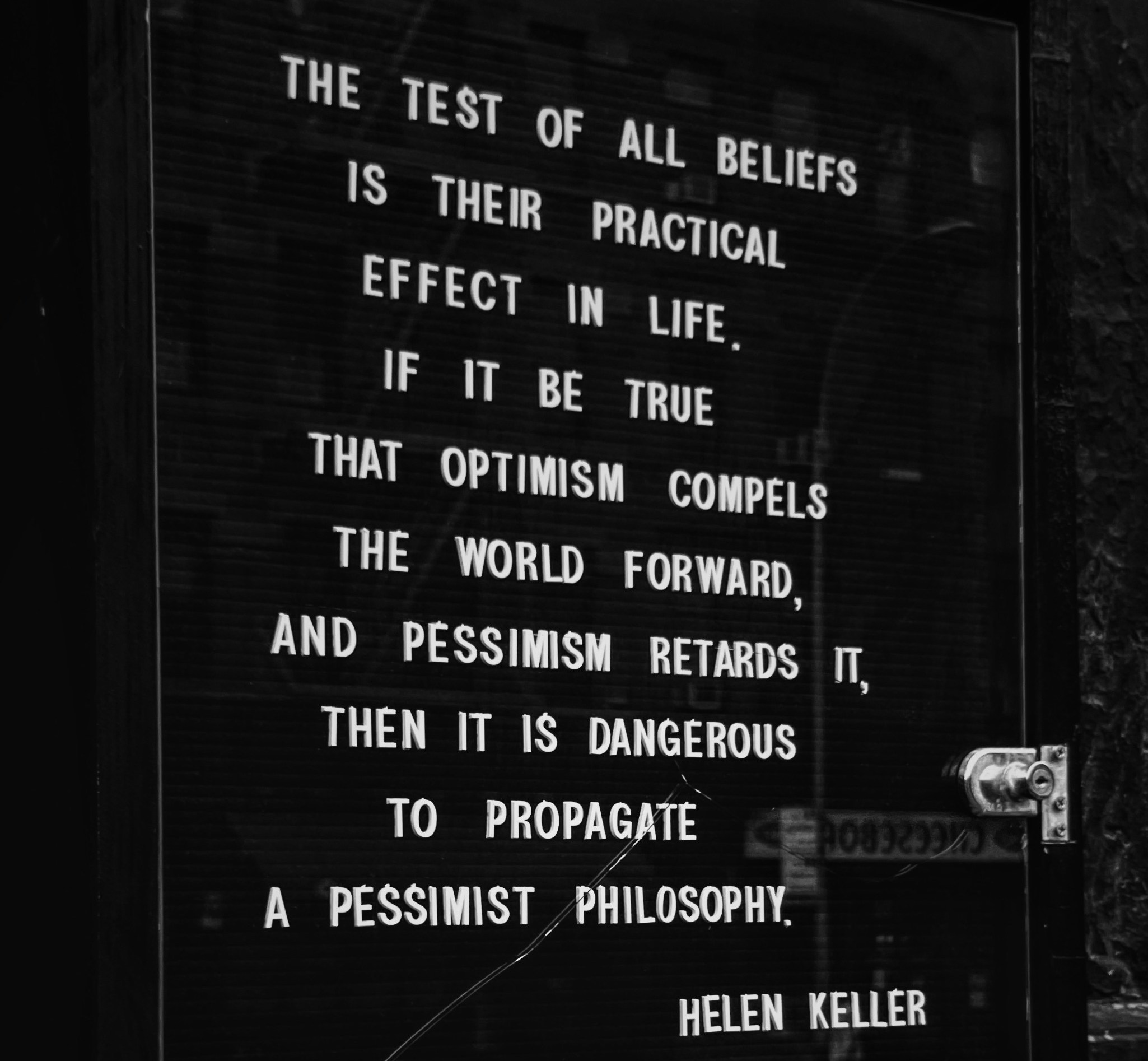
This whole idea is succinctly supported by the following quote of Helen Keller:
“The test of all beliefs is their practical effect in life. If it be true that optimism compels the world forward, and pessimism retards it, then it is dangerous to propagate a pessimist perspective.”
For those to be useful for the days or weeks between sessions (i.e. when your clients are out in their real lives, doing the work to apply the coaching), they need to stay aware of them.
CoachAccountable Key Insights is the perfect place to capture those. They’ll live as a tidy list of things to remember, easy for your clients to revisit. And by starring one or two for a given week, can be the focal point for your clients efforts that week.

Notes:
- 1Incidentally, this is the model on which the entirety of The CoachAccountable Perspective operates.